

A Manipulated Market Is No Market
Any way you slice it, the coming legal battle over the alleged market manipulation is a bad look for the nation’s organized wholesale markets.
After the movie-themed market manipulation schemes, ‘Death Star’ and ‘Get Shorty,’ from the California energy crisis entered the lore decades ago, we were assured that the master market designers would plug the holes in their RTOs so that bad actors could not, once again, defraud the public.
Unfortunately, market manipulation is back in the news, this time in MISO. FERC’s Office of Enforcement (OE) alleges Dynegy manipulated the MISO capacity market to harm Illinois consumers to the tune of $428 million dollars. Though heavily redacted in the details of Dynegy’s conduct during the 2015/2016 MISO capacity auction, the punchline from the Remand Report from FERC’s Office of Enforcement (OE) is “Dynegy knowingly engaged in manipulative behavior to set the Zone 4 price in the 2015/16 Auction.” As Utility Dive notes in describing the capacity prices for Zone 4, it “cleared at $150/MW-day. Capacity cleared at $3.29/MW-day to $3.48/MW-day in MISO’s eight other zones.”
Dynegy (now part of Vistra) certainly deserves its day in court. As we’ve recently seen in MISO with the 2022 capacity auction, prices can jump dramatically. It could be that the 2015/2016 Zone 4 capacity auction price spike can be explained as a signal of real capacity shortfalls, as opposed to Dynegy’s manipulation.
But, a few thoughts on the Remand Report.
First, the old chestnut that “justice delayed is justice denied” is operative here. It is six years after the alleged fraudulent conduct, and FERC OE is just now getting to the allegation of misconduct stage of the case. Dynegy’s defense of the charge promises to add years more to the process. To put this in perspective, consider that sorting out compensation for the market manipulation from the California energy crisis, such as it was, took well over a decade to start flowing back to customers who were harmed.
Second, the manipulability of the RTO/ISOs is a recurring theme. The complexity, opacity, delay in enforcement, low chance of getting caught, and enormous gains available from manipulation of these markets creates a dilemma for market designers and regulators. To be sure, any regulatory system will have its problems, but the current RTO/ISO system seems particularly susceptible to manipulation by the very nature of the institution.
This all leads to a conclusion that is particularly unsettling. Either:
a. FERC’s Office of Enforcement is wrong, and Dynegy’s actions were legitimate, or
b. Dynegy, a major player in the merchant generation business, truly did set out to manipulate the MISO market, or
c. The market rules are so complex, that not even sophisticated parties like Dynegy and FERC OE have a solid grasp of what does and does not constitute illegal market manipulation.
Any way you slice it, the coming legal battle over the alleged market manipulation is a bad look for the nation’s organized wholesale markets.
REPEATing the Past on Transmission Development
It is time to start encouraging creativity in business model development, then building a regulatory structure around the business model to ensure appropriate oversight and transparency. We can start with a signal from regulators, state and federal, and federal agencies charged with deploying IRA funding that this type of creativity will be rewarded in terms of regulatory support and even federal dollars. Otherwise, our transmission future is doomed to be a REPEAT of our transmission past, full of “just in time” transmission solutions or, even worse, no transmission at all.
Princeton University’s ZERO Lab, and namely Professor Jesse Jenkins and his team, have undertaken a holistic transmission analysis through its Rapid Energy Policy Evaluation and Analysis Toolkit (REPEAT) Project. The objective of the REPEAT Project is to provide “regular, timely, and independent environmental and economic evaluation of federal energy and climate policies as they’re proposed and enacted.” Good call.
The REPEAT Project’s recent transmission analysis reaches an unstartling conclusion, specifically that “electricity transmission is key to unlock the full potential of the Inflation Reduction Act [(IRA)].” In fact, that is even the title of the presentation. The clarity is refreshing in the world of energy and climate policy, where acronyms and code words rule the day and conclusions are barely discernible to even the initiated.
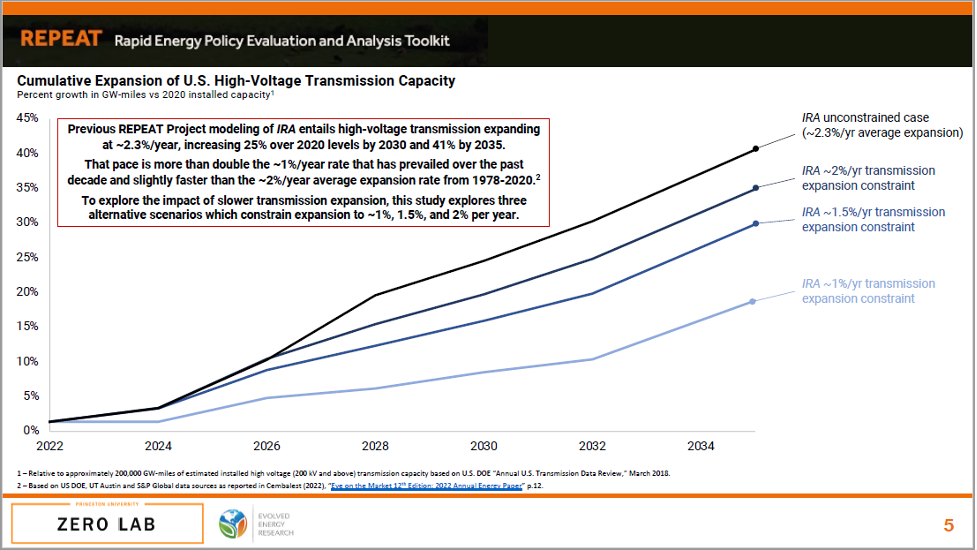
The REPEAT Project has previously found that the “IRA could cut U.S. greenhouse gas emissions by roughly one billion tons per year in 2030 and reduce cumulative greenhouse gas emissions by 6.3 billion tons of CO2-equivalent over the decade (2023-2032).” A very positive climate policy outcome indeed. There is a “but” there, however, in the form of what the REPEAT Project has recently found: “That outcome depends on more than doubling the historical pace of electricity transmission expansion over the last decade in order to interconnect new renewable resources at sufficient pace and meet growing demand from electric vehicles, heat pumps, and other electrification.” The figure below shows the reality of the situation.

Yet when you listen to technical conferences and read the avalanche of NOPRs and comments floating around at 888 First Street NE in Washington (that’s FERC) or in state commissions considering how to advance transmission development, you would not know it. Instead, a lot of what we see is a REPEAT, pun intended, of the battles of the past: cost allocation; transparency; prudence reviews; independent monitors; competition/build versus buy debates; certificates of need; and other traditional regulatory battlegrounds.
All of those issues are important. But In order to avoid a REPEAT of the past, and to be clear the past is reflected in regional transmission planning where projects get discussed, debated, planned, and not actually built, maybe we need to rethink some things. Customers, the power sector, and indeed the IRA itself would benefit from a reassessment of how we can encourage capable entities to come together and deliver on the transmission we clearly need to interconnect generation and deliver on the full promise of the IRA. Rather than create an overly burdensome, exhaustive, complex, and probably fatal regulatory quagmire for interregional projects to go through, we should encourage entities to come together, pull in federal support as permissible under federal law, and create multi-party investment vehicles that can deliver one of the upper lines of the REPEAT Project graph above, while reducing emissions and enhancing resiliency in the process.
It is time to start encouraging creativity in business model development, then building a regulatory structure around the business model to ensure appropriate oversight and transparency. We can start with a signal from regulators, state and federal, and federal agencies charged with deploying IRA funding that this type of creativity will be rewarded in terms of regulatory support and even federal dollars. Otherwise, our transmission future is doomed to be a REPEAT of our transmission past, full of “just in time” transmission solutions or, even worse, no transmission at all.

The Texas Summer Thrill Ride Grinds to an End
Six Flags Fiesta Texas amusement park in San Antonio debuted a new roller coaster this past summer. The world’s steepest dive coaster, dubbed “Dr. Diabolical's Cliffhanger,” promises patrons that, “Once you are exposed to this menacing machine, you shall live forever…IN FEAR!”
It sounds not entirely unlike the deregulated Texas electricity market, another machine that has been delivering white-knuckled rides to the state’s residents.
Six Flags Fiesta Texas amusement park in San Antonio debuted a new roller coaster this past summer. The world’s steepest dive coaster, dubbed “Dr. Diabolical's Cliffhanger,” promises patrons that, “Once you are exposed to this menacing machine, you shall live forever…IN FEAR!”
It sounds not entirely unlike the deregulated Texas electricity market, another machine that has been delivering white-knuckled rides to the state’s residents. Fortunately, for riders of both coasters, it appears the summer season has concluded without major incident other than leaving customers with lighter wallets and possibly a lingering bout of motion sickness.
In the case of Dr. Diabolical’s Cliffhanger, there is no doubt that a lot of behind-the-scenes engineering, planning and safety regulations help keep visitors protected from danger. In the case of ERCOT, let’s just say that a whole lot of regulatory safety interventions were imposed to keep Texas up-and-running.
Texas free-market advocates may be loath to admit it – but it was not much of a “market” that kept the AC blowing this summer in Texas. It was a conscious decision by grid operators and regulatory officials to intervene and use prescriptive mechanisms to funnel money to generators to ensure reliability. Texas called it “conservative operations,” but make no mistake, it is just another name for “market failure.”
How much did this market failure cost consumers? At some point the figures will be tallied, but we have some sense of the magnitude already. As reported by Reuters, ERCOT’s Independent Market Monitor has suggested it has already cost Texans $1 billion in just the first seven months of 2022. Other observers, including PFT Expert Ed Hirs, calculate that it is costing average Texans $10-$15 per month in additional charges.
Compared to the catastrophic consequences of widespread blackouts in the heat of summer (or the depths of winter), it’s understandable why Texas is turning to regulatory interventions to ensure reliability. The longer-term matter for Texas to resolve is how to design a more straight-forward regulatory structure that acknowledges reality: a successful utility grid of the future will require planning for reliability, not just reflexive talking points about “markets” that are failing at their most important function.
The sooner that planning begins, the better, lest the Texas power grid end up like two other coasters at Six Flags: the Iron Rattler and the Poltergeist. As of the writing of this blog, both are listed as “currently closed because of power supply issues.”
A Retrospective on Hurricane Ian
So say a prayer for all those in Florida that have lost property – and far more important things – to Hurricane Ian. But don’t forget to remember the front-line utility workers too, while considering the legal, regulatory and financial mechanisms that make a functioning critical infrastructure network possible.
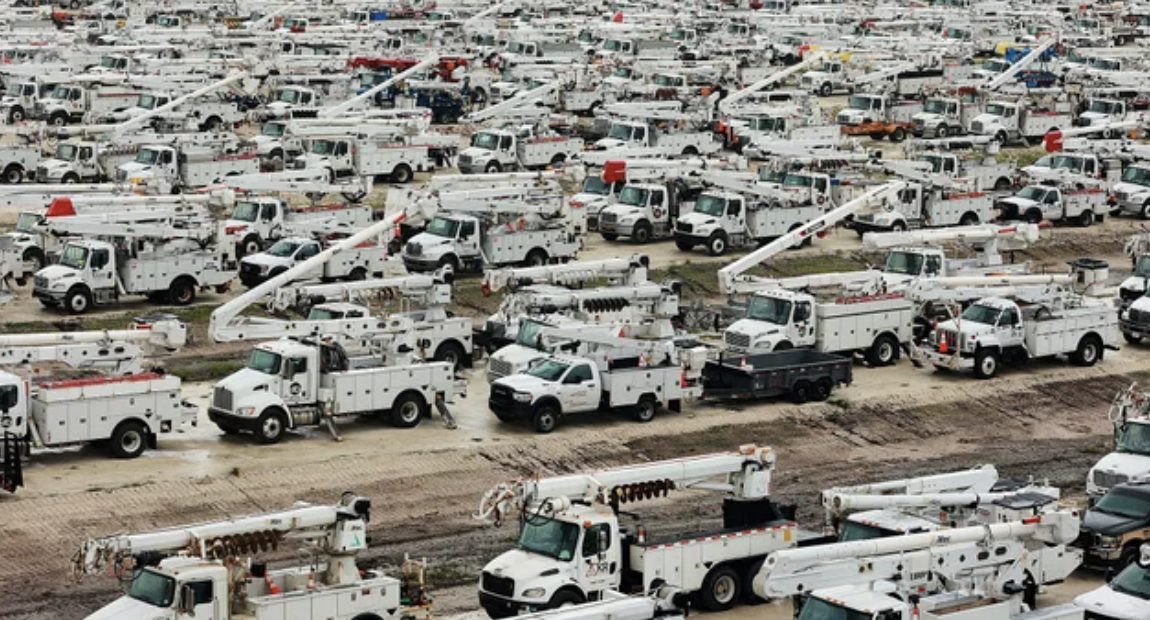
As it so often does, a tragic event focuses attention on what is truly important. So it is with the aftermath of Hurricane Ian. The images of the devastation along the Southwest Florida Gulf Coast have been heartbreaking, but the hurricane has also highlighted the efforts of the best among us. The first responders who helped rescue those in harm’s way are certainly in that group, and so too are the thousands of utility workers who left their own families to travel across the country to assist in the rebuilding of Florida’s energy infrastructure. The pictures you may have seen of thousands of utility workers pre-positioned to begin the rebuilding effort are the result of mutual aid programs organized by the nation’s infrastructure owning utilities.
It pays to recall what enables this sort of response, for it is largely carried out by those traditionally regulated utilities that own and maintain the physical infrastructure that helps preserve the health and safety of American communities through the provision of life-supporting electricity. At the center of this utility business model is cost of service regulation. Though maligned by some critics, it is the venerable legal and regulatory construct that allows critical infrastructure companies to invest in the equipment and human capital that make a rapid response to natural disasters possible. The trucks, line workers, poles and wires aren’t conjured from the ether. This sort of deployment is made possible by decisions and investments that arise from a stable regulatory environment.
So say a prayer for all those in Florida that have lost property – and far more important things – to Hurricane Ian. But don’t forget to remember the front-line utility workers too, while considering the legal, regulatory and financial mechanisms that make a functioning critical infrastructure network possible.
Struggling With High Electric Bills? Deregulated Energy Companies Say It’s Your Own Fault
By now it’s no secret that this winter’s energy bills are forecast to rise just about everywhere. But it is well established that if you live in a deregulated state, that increase will, unfortunately, be faster and higher.
By now it’s no secret that this winter’s energy bills are forecast to rise just about everywhere. But it is well established that if you live in a deregulated state, that increase will, unfortunately, be faster and higher.
The most recent evidence is coming out of Massachusetts, where the basic service rate for customers of National Grid is scheduled to increase 64 percent. That’s a steep increase for anyone, and especially for the most vulnerable such as elderly residents on fixed incomes. But if your grandmother in New England is struggling to pay her electric bills, don’t look to the deregulation enthusiasts at retail energy marketer NRG for sympathy. Their message: it’s her own fault.
According to NRG, things like natural gas prices, inflation, Putin’s War in Europe and electricity price spikes were all predictable events, and if you were too dense to not buy a long-term fixed price contract when prices were lower a year ago, then you have no one to blame but yourself. Doesn’t Grandma read the Financial Times?
Generous souls that they are, NRG now tells Massachusetts regulators that they’re still more than happy to sign-up customers to long fixed-term contracts. Switch to NRG affiliate Direct Energy, and they’ll provide you a nearly 23 cent/KWh rate for the next two years. Go with NRG affiliate Green Mountain Energy and you’ll have to pay almost 27 cents for the next 12 months. Choices, choices.
Unfortunately, for residents of the Commonwealth, the choice they won’t have is to pay the far lower rates offered by the regulated utilities that serve most of the country. The Energy Information Administration has released its most recent monthly state-by-state electricity rate comparison, and in a surprise to no one, rates in the predominantly regulated regions of the Midwest, South and West, continue to beat those offered by the “choice” providers in deregulated New England.

Vermont vs. the Rest of New England: A Case Study to Watch this Winter
New England’s electricity rates have long been among the highest in the nation. To a certain degree, it is the result of geography. The region is not home to strong wind resources like the Great Plains, ample solar resources like the Southwest, or plentiful shale gas like the Marcellus. But in other respects, the region’s chronically high electricity rates are the result of public policy choices. Among those choices is the fact that 5 of the 6 New England states deregulated their utilities and have now exposed their residents to the vicissitudes of electricity markets that aren’t working for the benefit of consumers.
New England’s electricity rates have long been among the highest in the nation. To a certain degree, it is the result of geography. The region is not home to strong wind resources like the Great Plains, ample solar resources like the Southwest, or plentiful shale gas like the Marcellus. But in other respects, the region’s chronically high electricity rates are the result of public policy choices. Among those choices is the fact that 5 of the 6 New England states deregulated their utilities and have now exposed their residents to the vicissitudes of electricity markets that aren’t working for the benefit of consumers.
Don’t be surprised if citizens and policy makers begin to take notice. In succeeding months, it will likely be hard to ignore the contrast between Vermont – which retained utility regulation – and the rest of New England. Some in the mainstream media are already noticing. Take, for example, this recent story about increasing electricity prices in New England. In it, reporters note that Vermont is simply different than the other 5 states:
“Five of the New England states have “deregulated” energy markets, meaning power generation is separate from power distribution. But in Vermont, utilities can own power plants or solar farms and sell their customers the electricity they produce.
Additionally, Vermont utilities meet the vast majority of their electricity needs through long-term contracts, like those with Hydro-Québec. These factors make comparing price changes in Vermont to the other states a bit of an apples to oranges situation.
That said, Vermont still gets about 10% of its power from the regional grid, and in part due to that, ratepayers in Vermont can expect to see their rates go up somewhat in the coming months – though likely not as much as in other New England states.”
The key takeaway is the last point: because of Vermont’s public policy decisions, the state’s electricity rates – while still high compared to the national average – are likely to not rise as much as its regional peers. By building a diverse portfolio of assets, including long-term contracts for renewables that the markets will not support, Vermonters have built-in certain customer rate protections. Not surpassingly, data from the Energy Information Administration bears this out. The most recent monthly electricity price data show an emerging price spread between Vermont electricity rates and the other 5 New England states. One month doesn’t make a trend, but common sense tells us that Vermont – by maintaining appropriate state-level oversight of its utilities – will be better positioned for the challenging energy prices that are expected this upcoming winter.

The Diablo’s in the Details
As California prepared for an epic Labor Day weekend heatwave and a round of potential rolling power outages, lawmakers were busy crafting a last-ditch effort to save the state’s single remaining nuclear power plant from retirement.
As California prepared for an epic Labor Day weekend heatwave and a round of potential rolling power outages, lawmakers were busy crafting a last-ditch effort to save the state’s single remaining nuclear power plant from retirement. Until recently, the Diablo Canyon Power Plant—with its 2,250 MW of firm baseload generation—was on track to shutdown in 2025, when its nuclear operating license expires. Pacific Gas & Electric Company (PG&E), the plant operator, has been planning to retire the facility for years, with encouragement from the state. But as a new California energy crisis looms, the legislature breathed new life into the nuclear facility this week—in the form of a $1.4 billion forgivable loan to PG&E to help keep the nuclear operating license in place until 2030.
California’s energy market is uniquely complicated. PG&E and other investor-owned utilities (IOUs) provide distribution services, but they own little of their own generation and a huge portion of retail customers are now supplied by community choice aggregators (CCAs). CCAs are expected to serve 38% of the IOUs former load this year, with an even higher percentage in PG&E’s service territory. The IOUs are fully regulated by the state PUC, but CCAs have more authority over their own resource planning processes. To add a layer of complication, the California Independent System Operator (CAISO)—which is regulated by the Federal Energy Regulatory Commission—runs the bulk of the state’s transmission grid. This means that when things go wrong, there is plenty of finger-pointing, but a distinct lack of accountability.
The Diablo Canyon debacle highlights how this lack of accountability leads to haphazard and costly resource planning. In 2016, PG&E filed a plan to retire Diablo Canyon and replace it with renewables and energy efficiency. The PUC rejected that plan, in part because so many had abandoned PG&E’s retail service that it had more generation resources than it needed to serve its bundled customers. In fact, one CCA argued that allowing Diablo Canyon to retire without any replacement would be just what the doctor ordered, that “discontinued operation of the facility, from an operational perspective, is likely a solution to PG&E’s declining energy requirements in and of itself.” (CPUC Decision 18-01-022). The PUC agreed and punted on any new procurement.
At that point, the reliability planning broke down. PG&E and the other IOUs had no reason to procure firm baseload power—all of them had more resources than they needed. CCAs were on a resource buying spree, but it was mainly focused on cheap renewables and the PUC had limited authority over the CCAs’ long-term procurement plans. While the CAISO routinely begged the PUC to authorize additional procurement it simultaneously extended the life of gas-fired resources by designating resource must-run (RMR) status to any resource that threatened to retire.
But with temperatures expected to hit 112 next week in Sacramento, the heat is on the politicians, who decided they couldn’t wait for California energy market to fix itself. Californians are already paying the price for poor planning, with rolling blackouts in 2020 and energy prices that have been through the roof—hourly energy prices hovered near the $1,000/MWh price cap during several days this week. Now they’ll also be on the hook for the $1.4 billion dollar loan to keep Diablo Canyon running. With all the out of market activity necessary to (hopefully) keep the lights on, one has to wonder whether California’s energy markets are worth the cost.
The IRA in Implementation: An Idea both Democrats and Republicans can Embrace
It goes without saying that the nation’s politics are bitterly divided. The recent straight party-line vote on the Inflation Reduction Act is proof of that. But now that the IRA is law, here is an idea that both Democrats and Republicans ought to be able to embrace: whatever one thinks of the legislation, the financial support contained in it should, at the very least, be directed to help consumers. It may seem an obvious thing to note, but the complex way utilities are regulated makes it less clear than Americans might imagine.
It goes without saying that the nation’s politics are bitterly divided. The recent straight party-line vote on the Inflation Reduction Act is proof of that. But now that the IRA is law, here is an idea that both Democrats and Republicans ought to be able to embrace: whatever one thinks of the legislation, the financial support contained in it should, at the very least, be directed to help consumers. It may seem an obvious thing to note, but the complex way utilities are regulated makes it less clear than Americans might imagine.
Among the act’s provisions, it creates, extends and modifies a package of tax policies that support various clean energy technologies such as wind, solar, carbon capture & sequestration, clean hydrogen, and nuclear power. But how can we make sure these subsidies, which will bring down the relative cost of clean energy investments, end up saving consumers money? Put another way, how do we make sure the subsidies are not simply captured by project developers, without the savings being passed on to the people who pay utility bills?
In states where their regulatory commissions retain cost of service rate regulation, it is a straight-forward answer. Regulated utilities will plan, procure and build new resources based on the updated cost profiles of various generation technologies. The utility will be responsible for arriving at a plan that appropriately addresses customer needs for reliability, affordability and resource diversity. If, for example, a renewable project is less expensive than it would have otherwise been without the IRA, then those savings will automatically flow through to customers. Likewise, if a MWh of zero-fuel cost renewables displaces an equivalent amount of generation with (an increasingly expensive) fuel cost – then those benefits will also be passed along to customers. In addition, the IRA’s provisions related to tax credit transferability will assist in ensuring regulated utilities can pass the value of tax-advantaged projects along to customers, and also create avenues for utilities to be able to develop these projects with new structures that can only enhance their cost-effectiveness. These benefits will advance competition within the integrated resource planning model.
In deregulated parts of the country, however, the answer is less clear. Unregulated merchant generators have no obligation to pass savings on to consumers, nor to invest in anything other than what maximizes their own profits. Their sole obligation is to their investors – often private equity or hedge fund investors seeking the outsized returns their well-heeled investors expect. Merchant generators will be more than happy to capture the tax benefits of investing in renewables, but so too will they be thrilled to reap a king’s ransom from wholesale energy markets that are driven not by the actual cost of renewables – but by today’s high cost of natural gas. Might there be some cost savings that eventually trickle down to consumers? Perhaps, but make no mistake, there are a lot of entities between the federal tax credit and the customer’s bill that will be looking to pocket the subsidy for themselves, while simultaneously passing high costs on to consumers. That is an outcome no policymaker should want.
We already know that states with economic regulatory oversight of their utilities will be able to ensure customers directly receive the benefit of the federal incentives which taxpayers are funding. Democrats and Republicans in Congress should look for ways to make certain that customers in deregulated states will also benefit, because right now, it is far from clear that will be the case.

What Goes Down Must Come Up: Here is the Emerging Price Trend to Watch
The next few years will be an example of “what goes down must come up.” To be sure, electricity prices are going to rise for all customers – whether in a deregulated state or not – but really hold on to your wallets if you’re in a deregulated state. Just as prices, as a percentage, dropped in an era of declining natural gas costs, the next few years will see the gap between deregulated and regulated markets widen once again.
Supporters of electricity deregulation, without much evidence, have long claimed that electricity deregulation has led to lower prices for consumers in those states that have attempted it. Of course, the facts do not back-up this claim, but it hasn’t stopped deregulation’s cheerleaders from making curious arguments to justify their position. Among those claims, is that “electricity rates in deregulated markets have declined at a rate faster than in traditionally regulated markets.” Unfortunately, this assertion is mostly an example of the games you can play with numbers, not a serious policy analysis.
To the degree electricity rates declined in deregulated states after 2009, it was a function of where prices started, and the declining cost of natural gas. Rates in deregulated regions were always higher than in regulated states, so when natural gas prices started falling thanks to shale gas, they had further to drop in deregulated states than they did in regulated regions – which had lower overall prices to begin with. So while prices often fell by a greater percentage in deregulated regions, the actual price paid by customers was still usually lower in regulated states. Even within a single state like Texas – where it is part deregulated, and part regulated, prices were generally lower for regulated utilities than deregulated ones. Nonetheless, the difference between the two slowly narrowed in recent years, as discussed in this report by the Texas Coalition for Affordable Power.
This contrast between regulated and deregulated prices likely stems from the fact that regulated customer rates tend to be a reflection of generation costs that are averaged over a fleet of generators; whereas deregulated markets expose customers more directly to the wholesale marginal cost of energy. This worked to the advantage of deregulated markets for most of the last decade.
But the next few years are likely to be less kind to deregulated markets. Marginal and wholesale costs of generation are skyrocketing . In PJM, which is the RTO covering some of the biggest deregulated states, prices are up over 120% over the same period last year. In New England, prices are up nearly 150%. And in Texas, last year (the period which captured the effects of Winter Storm Uri) wholesale prices were up a whopping 550%!
The next few years will be an example of “what goes down must come up.” To be sure, electricity prices are going to rise for all customers – whether in a deregulated state or not – but really hold on to your wallets if you’re in a deregulated state. Just as prices, as a percentage, dropped in an era of declining natural gas costs, the next few years will see the gap between deregulated and regulated markets widen once again. The bottom line: even when every wholesale market trend was favorable for states that deregulated, they never did on average have lower prices than regulated states. Now that the wholesale markets have flipped, just watch retail customer price trendlines in deregulated markets in relation to regulated ones. It’s not going to be pretty for customers in deregulated states.

The Texas Electricity Market: Competition in Name Only?
Supporters of Texas-style utility restructuring wrap themselves in the rhetoric of “competition.” They want you to know that if there is one thing they support– it is competition. Here at Power for Tomorrow, we support competitive forces too, we just believe that competition and regulation must be appropriately structured to benefit consumers. And importantly, decisions about how to regulate the utility industry, should be grounded in reality.
Supporters of Texas-style utility restructuring wrap themselves in the rhetoric of “competition.” They want you to know that if there is one thing they support– it is competition. Here at Power for Tomorrow, we support competitive forces too, we just believe that competition and regulation must be appropriately structured to benefit consumers. And importantly, decisions about how to regulate the utility industry, should be grounded in reality.
In that vein, policymakers considering direct retail access (sometimes called “retail choice”) would be well-advised to study-up on the real-world outcome of Texas’ retail choice experiment because the result has been anything but robust competition for average Texans.
A key feature of Texas electricity deregulation was forcing incumbent utilities to divest generation. Incumbents became regulated wires-only companies, while energy “retailers” – essentially middlemen energy marketers – were to compete for customers’ business using the wires companies to deliver their product (that is to say, electricity). But not all these energy merchants are created equal – some are known as “gentailers.” These are companies that both own generation and serve retail customers. And today these gentailers are some of the most ardent backers of retail choice and restructuring across the country. They also dominate the Texas electricity market, especially for residential customers.
Consider a pair of recently published studies in The Electricity Journal. In October 2020, several academics noted a significant trend: just two unregulated firms dominated the Texas residential retail electricity market. As of the writing of the article, those two companies – NRG and Vistra – were on the verge of controlling upwards of 80% of the residential market. The authors noted this lack of competition would result in a “highly concentrated” market classification using methodologies employed by the US Department of Justice. Recall also, this was before Winter Storm Uri, and since then, market concentration problems have likely become more pronounced.
The second study, published earlier this year, explored other data related to electricity competition in Texas. It found that prices offered by gentailers – like NRG and Vistra – were higher than those offered by retail providers that do not own generation.
Together, these findings paint a troubling picture of electricity “competition” in Texas. You have a highly concentrated market – one where an individual firm can exercise market power – paired with data showing those same powerful firms exhibiting a pattern of raising prices. This looks a lot like a powerful oligopoly (if not duopoly) increasingly unrestrained by either market forces or price regulation.
This is worth remembering the next time a retail choice advocate rails about monopolies and competition. It doesn’t appear their policies result in healthy competition, at least not for average residential customers. Rather, what emerges is a small number of firms, able to exercise market power, imposing prices above what a competitive market would bear. In other words – it is just the sort of outcome that traditional utility regulation seeks to avoid.

What do a Former Penal Colony and BoJo Have in Common?
With Prime Minister Boris Johnson on the way out, it is an appropriate time to take a different tact and pose this question. It is an odd question, to be sure, but one with a clear answer: both Australia and Boris Johnson have a current problem – namely, there is not enough current at reasonable cost on their respective electric grids. Australia and the UK have both seen soaring electric costs for customers, meaning political trouble is not far behind.
With Prime Minister Boris Johnson on the way out, it is an appropriate time to take a different tact and pose this question. It is an odd question, to be sure, but one with a clear answer: both Australia and Boris Johnson have a current problem – namely, there is not enough current at reasonable cost on their respective electric grids. Australia and the UK have both seen soaring electric costs for customers, meaning political trouble is not far behind.
Australia deregulated its wholesale power supply market and established the Australian Energy Market Operator (AEMO), and the United Kingdom also embraced restructured “markets.” And now the AEMO has taken the step of the ultimate market intervention by suspending the wholesale trading market and taking control of the market because “the power system was becoming unmanageable.” The suspension has lifted, but even price caps could not solve the issue for a time, forcing AEMO to act.
Meanwhile, in the United Kingdom, Prime Minister Boris Johnson and the government are growing increasingly concerned about the price of electricity and how it is tied to the marginal cost of gas production as opposed to the actual cost of generation. The Ukraine war has impacted natural gas prices globally. But both sets of troubles flow from flawed electricity market design.
Lost in the discussion is that cost-of-service regulation and the regulated utility model, as a general matter, can provide protections for consumers that are not at play in Australia or the United Kingdom. In cost-of service regulation, the price customers pay is based on—you guessed it—the cost of service and not the cost of a marginal gas unit. This design flaw is not unique to Australia and the United Kingdom. In fact, it is an electricity market design that we use right here in the United States in certain regions of the country.
We have seen the ramifications of this broken model during Winter Strom Uri in the ERCOT market, and now Australia and the United Kingdom are seeing variations on the same thing. There is a significant amount of noise in the system all the time about “monopolies” and the downsides of cost-of-service regulation, but rarely are those critiques looking at any kind of meaningful comparison between the pros and cons of that model and the problems inherent in deregulation.
With the world watching, as illustrated by this piece looking at “lessons” for India “to avoid [an] Australia like fiasco,” the United States should be taking a global view as well. We need to be honest about the flaws in our current electric market designs here in the United States. There may be Twitter confirmation loops to revel in by panning “monopolies” and celebrating “markets” as talismans for all that is good and great, but the experience of restructured “markets” points to more sober conclusions: bad “market” designs are another form of mal-regulation, not a triumph of Adam Smith’s invisible hand. Maybe it is time they go the way of BoJo and take a step aside.
Is There Any Safe Season in Restructured Texas?
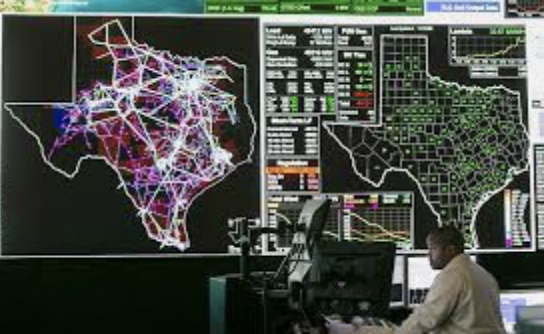
Here we sit less than 18 months later, and Texas is again teetering on the brink of blackouts. But now it is hot weather that is the culprit. Since we have established that both winter and summer are too much for the Texas market to bear – it is fair to ask, which weeks of the year is ERCOT prepared to handle? Better yet, perhaps it is time to admit that the Texas electricity story is a lot bigger than just cold weather.
For those old enough to remember the year 2021, you may recall that more than a few energy pundits were quick to sweep the Texas Winter Storm Uri blackout disaster under the rug as mainly a problem associated with cold weather. Their primary solution to Uri was winterizing the equipment and tweaking communications protocols, while leaving in place the state’s basic regulatory structure. For the true believers in utility restructuring, Texas was still their Shining City on a Hill, and they were more than happy to continue selling it as a model for other states to follow. That was their story, and they were sticking to it.
Here we sit less than 18 months later, and Texas is again teetering on the brink of blackouts. But now it is hot weather that is the culprit. Since we have established that both winter and summer are too much for the Texas market to bear – it is fair to ask, which weeks of the year is ERCOT prepared to handle? Better yet, perhaps it is time to admit that the Texas electricity story is a lot bigger than just cold weather.
The reality is, even when all or most generation units are available to operate, Texas struggles to keep the lights on, the furnaces running, and the A/C cooling under certain conditions. As PFT expert Ed Hirs has written about extensively – it is Texas’ flawed attempt at restructuring that sits at the center of the collapsing grid.
Unfortunately, for many the ongoing Texas energy situation is little more than a Rorschach Test revealing single issue agendas. For some, the blackouts are primarily a story about climate change. For others, it is all about promoting energy efficiency and demand response. For others yet, it is a story about intermittent renewables, or, alternatively, a lack of transmission interconnection. For others still, it is about thermal units that trip offline at inopportune times.
While there are nuggets of truth to each of these perspectives – they miss the bigger picture. The Texas “market” is failing its most basic duty. Rather than placing a premium on reliability, it is designed to drive towards scarcity, sky-high prices, and volatility. Resource adequacy is undervalued. Those are its features, not bugs. Any clear-eyed assessment of the Texas grid will have to come to terms with that reality or it – and any other state that adopts Texas-style restructuring – will continue to endure reruns of the past two years.

West Virginia v EPA In Perspective
A group called Power for Tomorrow should probably have a take on West Virginia v EPA, the Supreme Court ruling that struck down the Obama-era Clean Power Plan. Here it is.
A group called Power for Tomorrow should probably have a take on West Virginia v EPA, the Supreme Court ruling that struck down the Obama-era Clean Power Plan. Here it is.
Constitutional scholars will find much of interest in what it means for separation of powers, and the balance between Congress’s need to give clear authority to agencies for “major questions.” But for the utility sector generally, the questions and policy choices will remain where they have been for some years now: the states. States have been acting on their own climate goals with increasing urgency (and differences), and West Virginia v. EPA means it will be more that, and more so. To be sure, confronting a global collective action problem with action by individual U.S. states is more than a bit, shall we say, Quixotic. But that is where we are, and the planning and policy mandates in the states are where we will be for the foreseeable future.
Much will be made in the coming days and months about what this decision means from an administrative law and EPA regulatory perspective, to be sure. But the reality is regulated utilities are doing Clean Power Plan-like activities anyway under the auspices of their regulators. That will continue to be the case, and there is no “major question” there.
State Energy Policy – Not “Markets” – Is Saving the Day This Summer
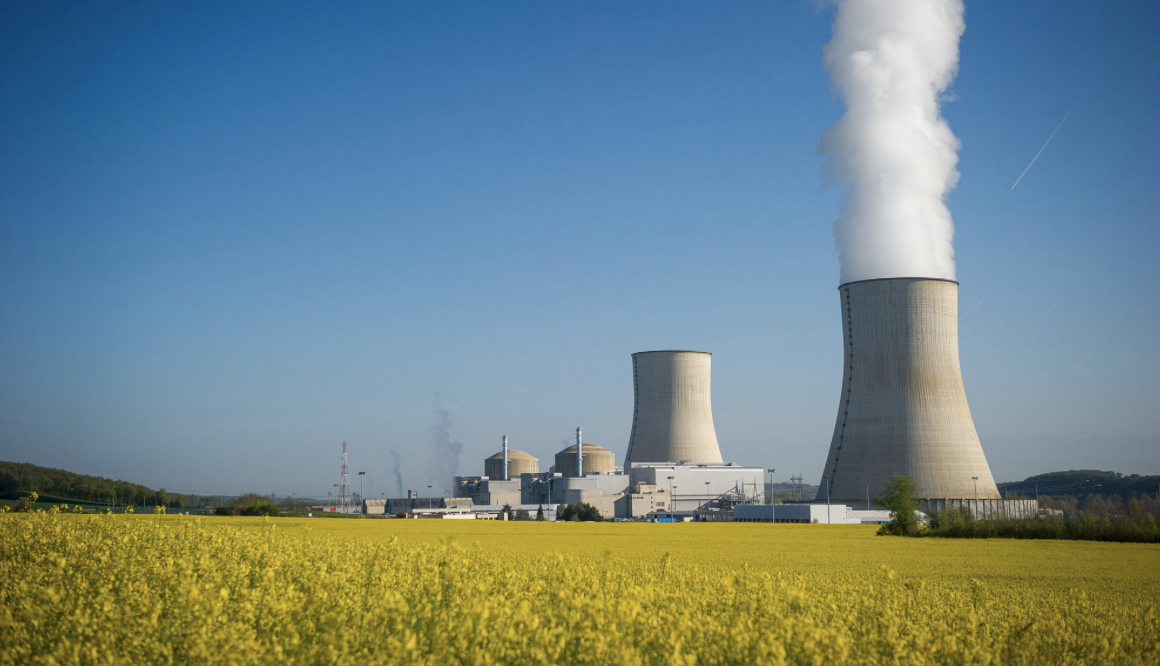
An underappreciated story during this summer of blackouts and high energy prices is the role that state energy policy played in keeping open significant portions of the U.S. nuclear generation fleet. Energy policy watchers know well the recent actions in several state legislatures to stave off the demise of nuclear generating stations around the country. These initiatives primarily arose in states that had deregulated their energy supply. To make a long story short: “markets” have been brutal to nuclear units. Nukes are carbon-free. They provide outstanding reliability benefits. They work 24/7/365 – rain or sun, wind or calm. They provide fuel source security and diversity to a grid that badly needs it. And as designed, the “markets” undervalued all those attributes, so state legislators stepped-in to subsidize the units.
An underappreciated story during this summer of blackouts and high energy prices is the role that state energy policy played in keeping open significant portions of the U.S. nuclear generation fleet. Energy policy watchers know well the recent actions in several state legislatures to stave off the demise of nuclear generating stations around the country. These initiatives primarily arose in states that had deregulated their energy supply. To make a long story short: “markets” have been brutal to nuclear units. Nukes are carbon-free. They provide outstanding reliability benefits. They work 24/7/365 – rain or sun, wind or calm. They provide fuel source security and diversity to a grid that badly needs it. And as designed, the “markets” undervalued all those attributes, so state legislators stepped-in to subsidize the units.
The retail choice crowd decried the legislators who made an understandable policy call to save their nuclear units from extinction. Thank goodness these legislators tuned-out the noise coming from the acolytes of deregulation. These units today aren’t just providing the juice that is keeping lights on – they are quite literally paying back – and then some – the customers and states that lent them a financial lifeline. As dire as the nation’s electricity grid looks this summer, just imagine how bad a shape the country would be in had these units been retired – which is exactly what the so-called “markets” were telling them to do. It all goes to show just how unworkable the deregulation theory has been in the electricity policy space.
Of course, no one should argue these state subsidies don’t distort the markets and have spillover effects on other resources – they do – but that brings the discussion full circle. The only reason so many of these retail choice states had to enact emergency measures to save these valuable nuclear units is because they deregulated in the first place. A well-structured system of state regulation – such as integrated resource planning – ensures that citizens have a diverse pool of clean resources that can support reliability, while smoothing out the inevitable price volatility that plagues the hideously complex and often unworkable “markets.” The subsidies that saved the nuclear units were but a band-aid to stop the bleeding caused by deregulation. If states want to heal the injury once and for all, they should look for ways to jettison the failed deregulation experiment and rejoin the majority of states that still maintain state oversight of electricity resource planning.
Harvard Business School Paper Finds Consumers Don’t Benefit from Restructured Markets
In the two (three?) cheers for regulated markets category, a recent Harvard Business School paper by Alexander MacKay Ignacia Mercadal finds that consumers don’t benefit from restructured electricity markets. From the abstract: “In some circumstances, regulated prices may be preferred to market-based prices when markets are not perfectly competitive.”
The paper reaches this conclusion by noting that market power concerns in retail choice markets swamp what might other be the cost minimizing incentives in a competitive market. What this means is producer welfare is enhanced because of the ability to exercise market power, but consumer welfare is not increased because the cost reductions do not make it down to the retail level. So, it’s good to be a generator in a restructured market; a consumer, not so much.
The important paragraph from the paper:
We find substantial price increases for consumers in deregulated states relative to consumers in regulated states. On the other hand, marginal costs declined in deregulated states, indicating that higher prices are driven by higher markups. Overall, we estimate that gross markups— retail prices minus the marginal cost of generation—increased by 15 dollars per MWh from 2000 to 2016. Relative to 1999 price levels, this change in markups corresponds to a 19 percent increase in prices over the period. Crucially, our data allow us to examine the impacts in wholesale markets, providing greater insight into the underlying mechanisms that explain this increase. We find that wholesale markups increased by more than the decline in generation costs, leading to higher wholesale prices. Wholesale markups increased by roughly 9 dollars per MWh, representing over 60 percent of the overall increase in gross markups. Retail markups also increased modestly. Thus, we find market power in the generation market to be the primary driver of price increases.
So, if your looking to start a business, open a manufacturing facility or just reduce your power bill, then head to a regulated state where someone – a regulator, albeit imperfectly – has your back.

Good News: Massachusetts May Eliminate Retail Choice
One theme of the clean energy transition is that state legislatures do not shy away from engaging in and directing energy policy. Massachusetts is no different. Case in point, Governor Charlie Baker (R) signed a bipartisan measure in 2016 directing utility clean energy procurements consisting of hydropower, renewable resources, and offshore wind specifically. The state legislature is now considering another omnibus energy bill to continue to advance the clean energy transition. In addition to indicating continued conflict and dysfunction between the independent system operator model and state policy prerogatives, the latest legislative effort has an interesting twist: S. 2842 has a retail choice rollback.
The notion of a retail choice rollback or re-regulation is oft discussed, but this Massachusetts proposal represents the first tangible effort to do so in some time. An equally interesting factor is who supports the rollback: consumer advocates and the Attorney General’s office. No, it’s not the purportedly villainous incumbent electric providers, but the erstwhile consumer advocates. That stinks for retail choice advocates that want to create a comic book good guy/bad guy narrative in support of their preferred model for electricity delivery.
Retail choice advocates want customers, regulators, and policymakers alike to believe that they and they alone are champions of competition; that retail choice is the only form of competition; and that the only thing standing between unfettered retail choice and customer freedom are incumbent utility dinosaurs. Facts can be troubling in politics, however, and Massachusetts has been digging into them. In a 2021 update to its ongoing study of the benefits of retail choice, the Massachusetts Attorney General’s Office found that “Massachusetts consumers in the individual residential electric supply market paid $426 million more than they would have paid if they had received electric supply from their electric company during the five-year period from July 2015 to June 2020.”
“Ruh-roh,” as Scooby-Doo said so many times. $426 million is almost half a billion dollars. It is no wonder that consumer advocates and the Attorney General are voicing support for this retail choice rollback—it’s right in line with their statutory charge to protect citizens and electric customers, more specifically.
This bill is one to watch for two policy reasons. On the one hand, it could be the first domino as states revisit the deregulation choices they made years ago with a data set to evaluate whether customers benefit or not. In addition, this shows that Massachusetts policymakers view retail choice as unnecessary, or perhaps even working at cross-purposes with, efforts to continue an affordable clean energy transition. Retail choice advocates will shout “competition” from the rooftops, but the half a billion in overcharges tells the story. It is no more competitive than other models of regulation, and it is quite a bit more expensive.
Re: the FTC, Four Loko, Retail Choice, and Net-Metering
The recent Federal Trade Commission (“FTC”) petition filed by the Center for Biological Diversity and a host of extremist characters gets points for creativity. But it should not get much more than that.
In the petition, the Center and their brethren make numerous anti-competitive allegations against utility companies. Perhaps the best take on the petition is that it seeks full restructuring of the utility industry, unfettered and full-boat net metering and distributed generation deployment, and a deep and extensive inquiry into municipalizations in any and all places. Ironically, those are the very interests represented on the signature pages, which form a healthy chunk of the petition.
The petition starts from the premise that without radical restructuring of the utility industry—using as pillars retail choice and net-metered distributed generation— the United States cannot get to its clean energy and climate goals. It is something of a Four Loko of energy policies. Four Loko is a somewhat notorious adult beverage that pulls together caffeine, taurine, guarana and alcohol, but the general consensus on Four Loko is that it usually takes you to a pretty bad place. The petition is similar.
Taken to its logical end, the petition seeks two major objectives that benefit two specific quarters of the energy world. Under the guise of anti-competitive behavior, the petition would have the FTC and regulatory bodies dismember utilities so that retail choice and rooftop solar can proliferate unabated. The winners there are retail energy marketers with an atrocious consumer fraud track-record, and developers of foreign-made rooftop solar installations who can throw solar on every roof – or at least the roofs of the wealthy customers that can afford it.
The losers of the petition are customers that bear the cost-shift associated with net metering, including low-income customers, and state and federal policies designed to drive emissions reductions and combat climate change. In the Four Loko energy transition, customers, workers, and climate policy lose while discrete segments of the energy business, hiding behind the signatures of the extremist groups on the petition, take the win.
The FTC should see this for what it is: a rent-seeking exercise by special interests with the purpose of sowing chaos and addressing a purported problem that does not exist. In addition, the FTC has a defined charge of consumer protection and anti-trust protection of sectors of the economy that are not heavily regulated like the electricity sector. The petition is an end run around the Federal Energy Regulatory Commission, state public service commissions, the Federal Power Act, and state laws regulating utilities. Four Loko was eventually banned in several states; the petition should meet the same fate at the FTC.

A Response to HBO’s John Oliver
HBO’s John Oliver this week waded into the world of electricity policy with an extended take on utilities, monopolies, and regulation. To the extent Mr. Oliver’s piece is intended to be taken as a serious policy critique – and not just a hit piece orchestrated by the rooftop solar industry – there are several glaring problems with his monologue. Perhaps the biggest, is his inability to articulate any vision of how electricity should be delivered reliably, and at a reasonable cost in the absence of regulated monopolies. Unless you believe in a world where electricity wires simply do not exist, and every home and business is an island unto itself, then there is not a way around a regulated monopoly utility at some level.
Mr. Oliver doesn’t offer any workable vision for how thigs should change, and he doesn’t really try since it is always easier to offer criticism than solutions. He makes passing reference to having government just run it all – but then dismisses that as unlikely. It is a strange argument considering he spends much of his piece belittling government officials who he says cannot be trusted to regulate the grid, but then suggests that same government should run it instead. He leaves out that most Americans would be aghast at turning the nation’s electricity supply over to the same entity that gave us the VA healthcare scandal, and loses mail on a regular basis. His only other suggestion is to encourage regulators to consider “performance based regulation,” which is actually sound advice, but hardly original thinking since regulators have been implementing it for decades.
While undefined, he seems to embrace a new electric utility regulatory model: retail choice and sole reliance on distributed generation. In Mr. Oliver’s regulatory model, no company has an obligation to serve, no company makes regulated investment, and rooftop solar simply powers the economy.
Easy right? Mr. Oliver shows the Reddy Kilowatt as a mascot, but the best graphic to show Mr. Oliver’s grid of the future is the black screen at the end of his piece. That adequately captures the state of deregulated Texas during Winter Storm Uri and what every night looks like with our distributed generation-only future.
Perhaps with a bit of self-reflection on his energy future of darkness, Mr. Oliver might also discuss a wild new concept – one where energy efficiency, renewables, and competition drive down emissions and make progress towards solving the climate crisis. This latter idea seems better than the first one from a safety, reliability, and accountability perspective. In fact, it sounds a lot like integrated resource planning (IRP) because that is what IRP is. Regulated utilities, not rooftop solar, kept the lights on during Winter Storm Uri. IRP is moving utilities deeper and faster toward emission reduction objectives than the vague notions embraced by Mr. Oliver.
One final observation: while the regulated utility is not perfect, and Mr. Oliver uses his comedic skills to illustrate that, it also should not go without mention that many of the scandals Mr. Oliver focuses his time on are from states (California, Ohio) where electricity generation has been deregulated. Instead, in these states it is owned by the merchant owners that he supposedly prefers. Oops – that kind of undercuts his thesis. Maybe the show’s producers can catch that in quality control next time.

A Victory for Common Sense in Arizona
As the old saying goes, “there is nothing more uncommon than common sense.” So, let’s take a moment to recognize Arizona officials who just applied a healthy dose of it by rejecting electricity deregulation in the Grand Canyon State.
Signed into law only days ago, Arizona HB 2101 repealed a dated statute that left open the possibility that state regulators could adopt Texas and California-style electricity deregulation. Deregulation efforts in Arizona had largely been left for dead the past decade, but NRG, a large Texas-based retail electricity company and one of the few Retail Energy Oligarchs that reigns over the deregulated Texas market, had recently made waves by pressing the Arizona Corporation Commission to adopt Texas’ electricity policies. Given Texas’ experience with deregulation – particularly during Winter Storm Uri resulting in extensive power outages, widespread destruction, and the tragic loss of life - NRG must operate under the belief that misery loves company. But Arizona lawmakers were having none of it.
Supporters of deregulation proclaim it as a free-market paradise, where utility consumers receive affordable, green, reliable power, at rates far below what they’d pay with a regulated utility. But 20 years of experience with electricity deregulation reveals its real outcomes. Expensive, volatile energy prices, consumer protection problems, and reliability disasters are electricity deregulation’s legacy. In California, where the legislature forced utilities to sell their generation facilities, local energy companies now scramble to find sufficient electricity to provide 24/7 power. In Texas, deregulation planted the seeds of the state’s massive blackouts and price spikes, by undervaluing the importance of reliability. And all of this happened while consumers paid billions more<https://www.wsj.com/articles/texas-electric-bills-were-28-billion-higher-under-deregulation-11614162780#:~:text=Texas's deregulated electricity market, which,Street Journal analysis has found.> than they would have with a regulated utility.
Arizona policymakers saw deregulation for what it is: a failed experiment. They did what anyone who uses common sense does: they looked at the facts as they are, they applied the lessons of history, and they made a pragmatic decision in the best interests of their constituents. Kudos to you, Arizona.